Audio only - uses much less data. Keeps playing with your screen locked.
4 x 4 Church Model · 2 of 2
4x4 - Part 2
Fellowship, breaking of bread and prayer
24 Oct 2026 · Schalk Reyneke
This teaching continues the four building blocks of the Acts church - fellowship and intimacy with the Father, the breaking of bread and prayer - and then shows how the same pattern works in your family, in discipleship and in the wider church community. It calls you beyond religious habit into real relationship with God, where conviction is formed between you and Him and what you give flows from that place, not from a set of rules.
Teaching transcript
Fellowship: the building block that makes the rest work
The principle applies in the first column. So I'm explaining the principle – there are really only four blocks that I'm explaining, and for the rest I'll talk a bit about how it's applied in the different columns. So relax, relax. Right. The second block is fellowship, and I'm going to share a number of verses with you regarding fellowship, because for me personally this is the core block of the sixteen blocks.
This is the block that makes the rest make sense. So I want you to really embrace this in your heart regarding the concept of fellowship.
“That which we have seen and heard we declare to you, that you also may have fellowship with us; and truly our fellowship is with the Father and with His Son Jesus Christ.”
So, an important concept. How can you and I have fellowship? We can only have fellowship to the extent that we are in Him. So I almost want to say: we meet each other there. You want to have fellowship? We meet each other there. Where is 'there'? There is in Him.
Because, you see, people have started joining us. The church has grown, things have flourished, and then they say, 'But I want to be part of this.' Well, you can't be part of 'this' as such. It's like, 'Where do I join? Where is your church? We want to be part of it.' No, you can't join like that. But you can join in Him. If you are in Him, you are okay. That is where our fellowship is.
That's why: you want to have fellowship with me, okay, but truly our fellowship is with the Father and the Son. This takes me back to what I said – I don't have anything else to offer besides the Spirit and the Word, because otherwise it becomes a man-fabricated thing. So if you want to have fellowship, if you want to embrace this, if you want to experience this, we meet each other in Him.
Because truly, that is where our fellowship is. So can you understand why this, for me, is the building block that makes this whole thing make sense? If you want to have fellowship with us – but truly our fellowship is with the Father and with His Son, Jesus Christ.
“Be still, and know that I am God; I will be exalted among the nations, I will be exalted in the earth!”
A safeguard against religion
Let me quickly tell you something that speaks to my heart regarding this block of fellowship. We have four blocks: the Word, fellowship, breaking of bread and prayer. This block of fellowship is, for me, the safeguard against religion. Because I can do the Word. I can take communion, quickly break a bit of bread. I can say, 'Thank You, Father, for the day.'
I can easily do those three things just to tick the box. But how do you walk in fellowship with the Father by ticking a box? It can't happen. That's why this fellowship box is so critical for me. There are four boxes here, and when we ourselves went through this, we had to start applying it ourselves. Jacques said yesterday, 'We've tested this thing, we've stress-tested this thing,' and someone might say, 'Ah, but maybe it's...'
No, this is how it is. That's why this fellowship block is, for me, the most critical block, because it is what stress-tests this whole thing – to say it's relational, it is fellowship. And part of it is: when I go into my prayer closet, can I do any of these four things?
Empty hands before the Father
So now I go into my prayer closet. I think block two is fellowship. I say, 'Okay, fellowship. But I'm in my prayer closet now – what do I do here? Okay, let me pray.' No, no, no – prayer has its own block. 'Okay, let me read the Word.' No – the Word has its own block. 'Okay, let me hold communion.' No – its own block. What's left? Empty hands. An empty agenda. There's nothing here. Here, Father, I seek You. I only want You.
Show me more of You. Let me dwell in that place of intimacy. So where does that leave you? You put your Bible aside, you put your prayers aside, you put your communion things aside, and you say, 'Father, it's just me and You. I only seek You.' And you cry out, you seek Him, you desire Him, you commune with Him. An interaction starts taking place. And that is the place that prevents you from being like the seven sons of Sceva, who said, 'You, come out in the name of Jesus whom Paul preaches!'
No, now it is: who are You to me? Who are You to me? I need to seek Him so that whatever my revelation of Him is, is personal. You can't have my relationship with the Lord. You have your own relationship with the Lord. I can help you. I can point like John the Baptist. I can support you. That's column four, we'll get to that, but I can do a lot of things – yet you are the only one who can have your relationship with the Father.
And some people struggle with silence in their heads. They need to have an agenda. They don't want silence, because they don't want to hear themselves. So they have to do something – watch a teaching, read a book, read a chapter in the Bible, pray, put on worship music, stay busy. This is the block where I say: wipe everything off your table. Everything – there's nothing. And now you seek Him. And that is where verses like this begin to speak to me: deep crying out to deep.
This is not religion. You will struggle to turn this into religion. This is not a habit where you tick a box. This is relationship, revelation. It's like John coming before God, and he fell like one that was dead – he lay there as one who is dead, because of that presence of God. Jacob, who walked with a limp in the end, because he sought God and said, 'I will not let go.'
'I don't care what the price is, I will not let go. Bless me, I will not let go.' Do you have that desire to seek Him, and only Him? Not religion, not habit, not an agenda of, 'Father, I come to You because I have a big meeting today, and my child is sick, Father, and, and, and...' No – there must be a time when you come just for His sake.
The burning bush
And you fellowship in that place, because you cannot turn that into religion – you will seek Him, and He will reveal Himself to you. The Word says: if you seek Him, you will find Him. The story of Moses also always speaks to me, and I talk about it a lot – the burning bush. Moses was walking. He wasn't looking, and nothing happened. Then at some point, out of the corner of his eye, he sees a burning bush. And it says he turned and looked at this bush with intent.
And the verse says: when God saw that he was looking, He started speaking. There is a place where God waits for you, where you must come and say, 'Here I am, Father. I seek, I look, I long, I look at the burning bush. My eyes are on Jesus. I seek You, Father.'
And if you're in that place, you will find Him. You will find Him in a place of depth in your heart that no one else can produce for you. You can't say, 'Yes, but this preacher teaches us this, this pastor teaches us that.' There's a time and place for that, but when you go into that prayer closet, it is you and the Father. The same thing we spoke about regarding discipleship – raising a child so that he can become independent.
You cannot have a relationship with God through someone else. That's where many of these churches become corrupt – he's this titled person, and if you want to come to God you must go through him. He speaks on God's behalf. He hears a bit better what God is saying. He will tell you what God says. Don't think for yourself – he knows, he will tell you. How many churches are there that have started promoting that corruption, and it takes hold and grows?
No. My primary responsibility is to tell you, like John the Baptist, 'There's One – can I point you to that One? Because if you can connect with that One...' This fellowship block is what makes everything work, because then no one can come to you with lies, because you'll say, 'That God you're talking about is not my God. I know my Father. I know what He looks like. I know how He speaks.' If Satan comes with some story, yada, yada, yada, you say, 'I know my Father's voice, and He doesn't speak like that.'
Get out, in the name of Jesus! Be still, and now. Many struggle with the 'be still and now.' There must be noise, there must be worship music – all those things are good, but there must be a time when you make this block your own.
“Deep calls unto deep at the noise of Your waterfalls; All Your waves and billows have gone over me.”
Deep calls unto deep
Just you, the room door closed, you and the Father, where He becomes a reality to you. Do you know what happens during this time of fellowship? You start to discover who God is. His identity, His character is revealed to you, and you get a conviction that no one can move you from. And once you have that idea of who God is, what is the next thing that happens? You start to form your identity. Purpose and identity.
Here we are again. In your fellowship with the Father, you start to discover who you are. That is where your identity comes from, because He said He would make you – He made us in His image and likeness. So if I want to know who I am in Christ, I look at who the Father is. Who is Jesus? They said to Jesus, 'Show us the Father.' He said, 'I have been with you so long – what do you mean, show you the Father? Here I am. If you have seen Me, you have seen the Father.' That is the place we live from.
If someone says to me, 'Show me God,' I must be able to say, 'Hey, have you seen me? Then you've seen the Father.' That is the place from which we must function, in terms of my conviction of the reality of who God is.
“There was a man sent from God, whose name was John. This man came for a witness, to bear witness of the Light, that all through him might believe. He was not that Light, but was sent to bear witness of that Light. That was the true Light which gives light to every man coming into the world.”
“My sheep hear My voice, and I know them, and they follow Me.”
There's a union here. You know this verse – the word 'know' is the same word used for intimacy. So the union between a man and a woman that takes place in marriage is the same thing happening here. It says, 'My sheep hear My voice.' I must be able to recognise God's voice. And when I recognise His voice, if I respond to it – the Romans 10 passage also applies.
You believe with your heart, you confess with your mouth. Then you come to that place of union where God can come and dwell within you. He can become one with you, because in reality you have responded to who and what He is.
“But the hour is coming, and now is, when the true worshipers will worship the Father in spirit and truth; for the Father is seeking such to worship Him.”
The Lord doesn't seek religion. He doesn't seek offerings. He doesn't seek empty noise. He doesn't seek the empty shell where the life has long been drawn out. He seeks you. He seeks your heart.
Sustainable because of relationship
First and foremost, He seeks your heart. But we can very easily start filling that up. 'I'm busy. I'm busy with the things of the Lord. I'm busy, I'm busy, I'm busy. I go to church. I disciple. I have outreaches. I have events. I have this, I have that.' Whoa, whoa, whoa – where is your relationship with the Lord? Remember, I keep referring you back to the word we used last night: this is sustainable. What makes it sustainable? The fact that I have a relationship with the Father.
So when this thing comes and knocks me on the head, knocks me over here and I fall, I can get up, because I know who He is. I don't doubt and say, 'What did I do wrong? Does the Lord want to punish me? Will I always suffer?' No. No lie can find its place in my heart. No weapon fashioned against me shall prosper; it shall fall to the ground and amount to nothing. For if you know truth, truth will prevail.
I spoke about this earlier too, in 2 Corinthians:
“But we all, with unveiled face, beholding as in a mirror the glory of the Lord, are being transformed into the same image from glory to glory, just as by the Spirit of the Lord.”
Process that quickly in your heart. We, with unveiled face. Remember, this was spoken in the context of Moses – Moses who was on the mountain. He was in the presence of God. His face glowed. When he came down, he put a veil over his face, partly because of the glow, but on the other hand, the glow began to fade with time.
He put this veil over himself, but his face glowed, and this was in a dispensation where the Holy Spirit had not even been poured out yet. How much more, if Moses' face glowed, how much more must I, when I come out of my fellowship with the Father, have a face that glows. My being, who I am, the conviction, the reality, the ability to manifest reality – when I dwell in that place, my face must shine. We, with unveiled face.
Becoming what He says I am
Religion thrown off, religion thrown off. Beholding as in a mirror the glory of the Lord, being transformed into the same image, from glory to glory, just as by the Spirit of the Lord. I told you: in that intimacy and fellowship with the Father, you determine, you see who God is, His identity. And then this is the mirror that says, 'This is who You have made me.' It's not me who decides how this works or how He made me. I am who He says I am.
It says: as Jesus is, so am I in this world. So who am I to argue? I must embrace what He has created. I must embrace the way He has put it in place. And that means that if I look, I become. I look, I become. If I don't look, I don't become – because then I believe the lies. I believe how I grew up. I believe what's possible.
I always tell the story of Moses with his staff, because for me it's a conviction we must live from every day. When he stood before the water and the Lord said, 'Here's water, here are the Egyptians, you are pretty much stuffed' – no. The Lord said, 'What do you have in your hand?' 'Okay, I have a staff.' The Lord says, 'Okay, split this water.' Now I think to myself: what if Moses had said, 'Lord, how many people have done this before?' And the Lord says, 'Let me count... no one.' And Moses says, 'Ah, okay, then I'm not going to do it either.'
We cannot live from a place that is only history, religion, habit and whatever I think. We must open our hearts so that God puts me in a place where I can say, 'I have never seen this.' I have never seen someone raise another from the dead, but You say I can. So when I have that opportunity, and You give me the conviction, I will raise them from the dead – not because I think I'm somebody important, but because He says that is what He sent me for.
So block one, the Word, because the Word gives me this truth. Then block two is fellowship – now I'm in this intimacy where God reveals Himself, His character, His person. Part of this is the same as the Word, because He reveals Himself through the Word. But I come to the place where I have absolutely no doubt about who He is. And then I have absolutely no doubt about who I am and what He has sent me for. And then nothing moves me from that place.
Can you understand why column one is so important? Sort yourself out in column one – don't run around in column four before you've sorted out column one. You can be the greatest evangelist in column four, but if you haven't sorted out column one, it's not sustainable.
“For you were once darkness, but now you are light in the Lord. Walk as children of light.”
I look – whoa, I am light. Not a reflection of light, not a resemblance – but you're not God, so you can't say it like that. No, He says He made you like He is. He says as Jesus is, so are you in this world. You have become the light, not a reflection of the light.
You are the light. And I say you have become the light. Walk as children of the light. Refuse to accept the lies of Satan and religion, and function in the fullness of who you are.
“This is the message which we have heard from Him and declare to you, that God is light and in Him is no darkness at all. If we say that we have fellowship with Him, and walk in darkness, we lie and do not practice the truth. But if we walk in the light as He is in the light, we have fellowship with one another, and the blood of Jesus Christ His Son cleanses us from all sin.”
And then we position ourselves in terms of the working of the Holy Spirit.
“Now we have received, not the spirit of the world, but the Spirit who is from God, that we might know the things that have been freely given to us by God. These things we also speak, not in words which man's wisdom teaches but which the Holy Spirit teaches, comparing spiritual things with spiritual. But the natural man does not receive the things of the Spirit of God, for they are foolishness to him; nor can he know them, because they are spiritually discerned.”
How will you compare if you don't know? You can only compare if you know – comparing spiritual things with spiritual.
Knowing the Things of God by His Spirit
This is one of the most significant verses in my life, starting with the part before it that says:
“For what man knows the things of a man except the spirit of the man which is in him? Even so no one knows the things of God except the Spirit of God. Now we have received, not the spirit of the world, but the Spirit who is from God, that we might know the things that have been freely given to us by God.”
How amazing is that? He says: who knows everything about you? Your spirit. Who knows everything about God? His Spirit. But you have received that Spirit. And not only have you received that Spirit, you received Him with a purpose, so that He can show you everything God has already given you.
That is reality. And when you see that reality, he goes on to say:
“Now these things we also speak, not in words which man’s wisdom teaches but which the Holy Spirit teaches, comparing spiritual things with spiritual.”
You walk in a reality that overwhelms you so much that your face begins to shine. Your reality doesn't become a doctrine, a religious argument, or a question of whether I've ever seen this before in my life. That's irrelevant; it's reality. And you function from that place. We are ambassadors of Christ. I represent something. I represent a reality in this world, the world.
Breaking of Bread
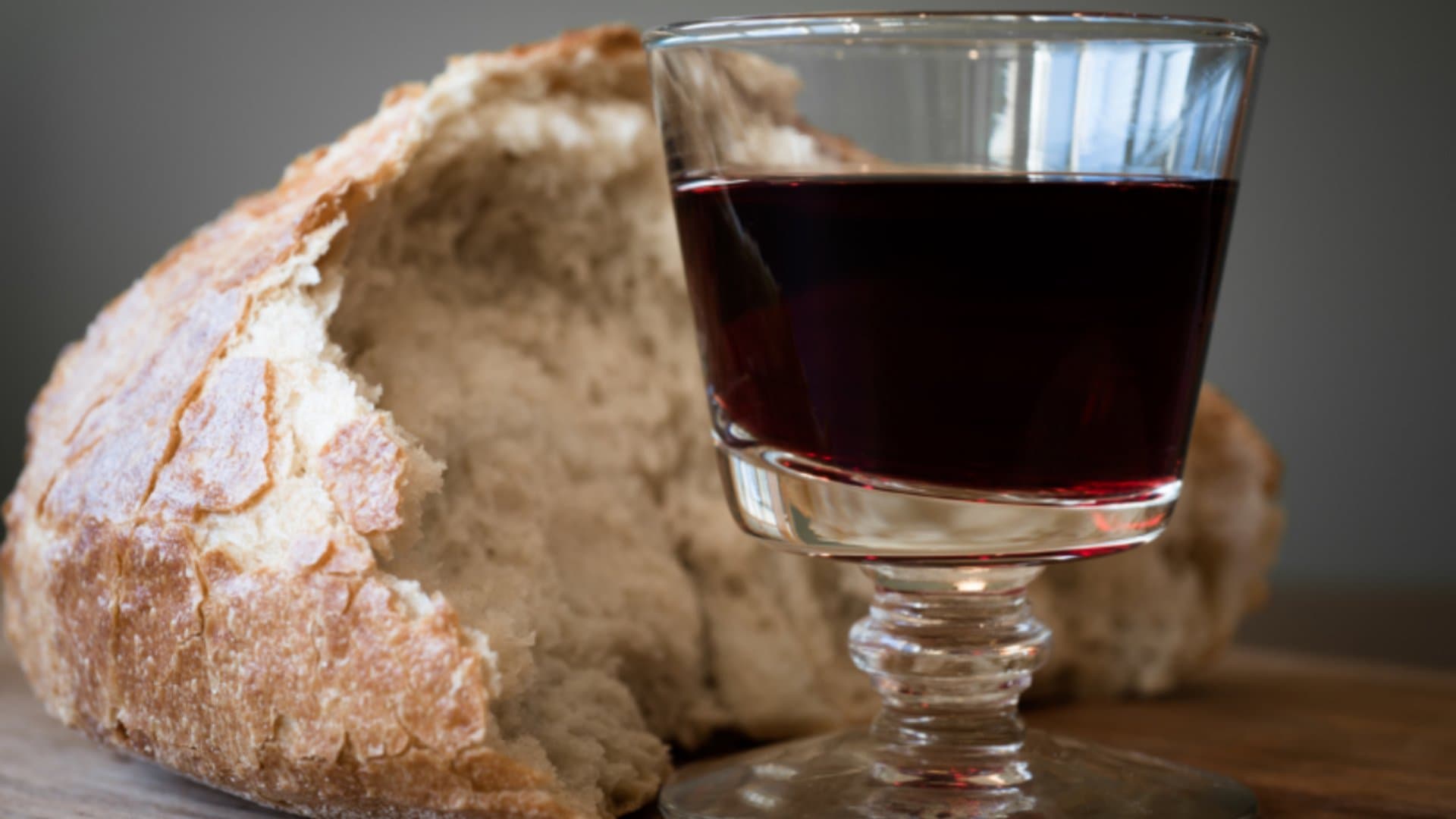
Okay, we're at block three. Stay with me. Breaking of bread. For us, in many terms, breaking of bread is communion, the Lord's Supper. But this goes to the core of what communion represents, what the Lord's Supper represents.
The essence of it is to remember what Christ did for me, to remember who He is, and to function from that place. Part of the key factors they practised at that time in the church of Acts:
“So continuing daily with one accord in the temple, and breaking bread from house to house, they ate their food with gladness and simplicity of heart.”
Now here's something important about this concept – we understand it, we know it, but I want to challenge you again to understand the essence of the breaking of bread. Isn't it interesting – I said at the beginning, what are we busy with, and what is the purpose? Is the purpose that I want to sort out my marriage, sort out my business, sort out my children, and I want to be happy, be healthy and retire early, and that's it? So I'm just going to call on Jesus for all these things, and then it happens?
No. It is His kingdom, His plan, His strategy. How do I get there? He has given us the perfect strategy for how I get there. And often we think it looks like this: I strive for – this is my bread. I must just make sure my bread stays whole. I must make sure I'm healthy, that my marriage works, that my finances…
I take care, I take care all the time. I try to build this thing unto perfection. That's not what it says. It says breaking bread. That's what it looks like – not a whole loaf. So when we talk about communion, when we talk about breaking of bread – what is it, when it comes to breaking of bread, that you must give? Breaking of bread is about what you bring.
Giving What You Have Received
We quickly eat together on a Sunday, but we all bring something. Paul says in 1 Corinthians 14: how is it then, when you come together, everyone has something to share. What is it that you bring? Maybe it's from that place of worship – and it's interesting, the order of these blocks. The first is the Word, that reality. The second is fellowship, the relationship that brings me to conviction. And then the third thing, the breaking of bread, is what I bring from who I am – my identity, what I've been made, the gifting, the structure, my purpose within the body, my conviction about it.
“From your innermost being will flow rivers of life-giving water.”
From that place. I don't receive in order to store up. I don't receive in order to get fat. I receive in order to give. So now I come to the conviction: wow, this is who God is. This is who I am in Him. Just to come to the realisation that it is I who can give it away. Because what did Christ do?
He didn't come and try to hold on. He said: what I am, what I have, I give. And by giving it, He made it possible for us to be one with the Father. What you have to give creates the opportunity for others to be one with the Father. And what you have to give is specific to you. But you must do column one and two in order to be able to give in column three.
You cannot worship like that if you don't spend time with the Father. If you go on your knees without an agenda, in fellowship and in intimacy – that innermost being, that koilia – they don't even have a proper word to describe it, because they try to describe it as womb, as belly, as innermost being. That is where your spirit brings life from, John 7:38. That place of life – what is it in you? What has God made you? Because then you come and you say: yes, okay, now I know who I am.
Now that I know, now I give it away. And that's why it's the sustainable strategy, because it wasn't: what can I gather? How does this work so that I can sort out my life, sort out my family, sort out… It's not about me, me, me, what can you bring so that I can have a better life? No – I come as I arrive.
Remembering What Christ Has Done
That's why he says, how is it then, when you come together, everyone has something to offer. Take me back to the conversation about the men who distributed food – they had to be men full of the Spirit. It doesn't matter what you do. You do what God sent you for, but you must figure out what your bread looks like so that you can give it. And that is what breaking of bread is. From that place of intimacy, of identity, of the conviction He has given me, of what He has made me – I come, and I say: I give, because You come and give me what He has made you.
And we all need each other. Each one of us has something to bring, but you have to bring it.
“And He took bread, gave thanks and broke it, and gave it to them, saying, 'This is My body which is given for you; do this in remembrance of Me.'”
So in remembrance – when we take communion, when we take the Lord's Supper, which we will do again tomorrow, when we do that, we remember what Jesus did for us. And what is part of what we remember? He gave Himself. So when I bring Him to remembrance, I bring to my own remembrance that I have received so that I can give – not to store up, to give.
“For as often as you eat this bread and drink this cup, you proclaim the Lord's death till He comes.”
So I have a place of faith from which I function. By giving – if the Lord gives me that conviction to give – then I know He will provide. Not doing the sums and saying, 'Well, that doesn't work for me right now; come ask again next month.' What does the Lord say about you? Why did those people have to be filled with the Spirit? Give me men full of the Spirit. Because if you're not full of the Spirit, you'll function in the flesh, and it is the Spirit that gives life. So now you must know: when this person comes, should you help or not? There isn't a set of rules. The amazing thing about block two, fellowship, is this:
Relationship, Not Religion
It's a relationship with the Lord. So that when I step out of the house, the Holy Spirit might say today, 'Turn right.' Tomorrow I step out of the house, and the Holy Spirit says, 'Turn left.' From a place of relationship, not religion. Because religion will tell you, you must always turn right – that's our rule, you always turn right. And then you miss the opportunity the Holy Spirit gives you, just as He said to the disciples: it seemed good to us in the Holy Spirit not to do this.
“And Jesus said to them, 'I am the bread of life. He who comes to Me shall never hunger, and he who believes in Me shall never thirst.'”
Do we believe that He is the bread, that He is bread for me – meaning I can give away everything I have, everything, and He will take care of me? Or do I think I must hold onto a few things, just in case, just because of this and that?
I'm not saying you must now recklessly go and give everything away – that's not what I'm saying at all. I just want to quickly give you my bank account details – I'm joking. You must function in obedience. All I'm saying is we must come to a place from which we function where you have the conviction that God is your provider, and not your clever little plans. Part of what you give could be that God has blessed you to be a successful businessperson, so that you carry a greater role and responsibility when it comes to finances than someone else does.
The fact that one person led worship last night and had a primary role might mean that in a different scenario, you have the primary responsibility, and that might include finances. And then you must listen to what the Lord says to you, in that second block of fellowship and intimacy. No one can tell you that you must give your tithe. You must have the conviction – maybe this month you must give fifty percent – but you must have that conviction between you and the Lord. That's what gives life. It is the Spirit that gives life. And then you function from that place, not from a set of rules.
Everything I Have Is a Gift
“But He answered and said, 'It is written, "Man shall not live by bread alone, but by every word that proceeds from the mouth of God."'”
That is your life. So do you understand why, in context, this follows on from blocks one and two, where your reality of the Word is – but you must spend time in it, otherwise you won't know. Then number two, there must be time where you spend time with the Lord without an agenda. And then you come to three, where you understand everything I have is a gift from God.
And I need to function from that place of block two, where I have a conviction of what I must do with what the Lord has given me, because He didn't give it to me for my own purpose. The Ephesians 4 passage asks, what are we heading towards? Back to the purpose God has:
“…till we all come to the unity of the faith and of the knowledge of the Son of God, to a perfect man, to the measure of the stature of the fullness of Christ.”
And then it explains how we get there:
“…from whom the whole body, joined and knit together by what every joint supplies, according to the effective working by which every part does its share, causes growth of the body for the edifying of itself in love.”
We're not going to come to the fullness of readiness. It says Jesus is coming back for a bride without spot, without blemish. So that means we cannot be satisfied with where the body of Christ is now. We cannot be satisfied with what church looks like in this world, because it says Jesus is coming back for a bride without spot, without blemish. We are heading somewhere. He says, until we come to the measure of the stature of the fullness of Christ – then He returns. And the only way we get there is every part doing its share and every joint supplying. So whatever it is you have to bring, you must bring it, because otherwise we are not getting there.
Prayer: Worship Before Petition
And then we move into prayer, block four. Now, prayer here connects very closely with block two, but for me there's an element… There are many different types of prayer. There's intercessory prayer. There's the prayer of faith.
There are different prayers in the context of prayer, but many of them connect to the previous three blocks, in the sense of the declaration of the Word. This includes what the now-word is – the rhema word versus the logos word for now. So I need to function from that place, and in terms of what I have to offer. So now I must step up in prayer. By default, my prayer shouldn't begin with what I need – my prayer should begin by worshipping God.
So in that place of prayer, it is still, first of all, about Him. And in that process of prayer, He begins to reveal to me: okay, this is what must happen, this is what the responsibility is for. That's why intercession is so important, because during that time we are establishing things in the Spirit so that it becomes possible for someone.
“…whose minds the god of this age has blinded, who do not believe, lest the light of the gospel of the glory of Christ, who is the image of God, should shine on them.”
So I must pray. I must pray.
Interceding Without Anxiety
Sometimes you have to pray for one person for years, so that their eyes can open. What is too long? What is too long to pray? There is never too long, until God tells you to stop praying. So the responsibility we have towards each other – we carry each other in prayer where there are challenges we might not even know about yet, in order to prevent them. To hear, to give a word of warning, to be in that place of intimacy and make sure we turn towards each other and take care of each other – prayer is one of the critical elements of that.
And in that, to say: we are anxious for nothing. We are anxious for nothing. We've already said we understand that God has actually already made everything available to us. But in prayer – and even in that prayer – He will reveal to us what provision He has made. And then you function from that place. And this must be the place we strive towards: to have peace in your heart. Then it doesn't matter what happens, even if it looks like the greatest trauma, the greatest setback in your life.
To function from that place of peace, to say: nothing can take this peace from my heart. And part of that is established in prayer. And then the Holy Spirit plays a critical role in that too – likewise:
“The Spirit also helps in our weaknesses. For we do not know what we should pray for as we ought, but the Spirit Himself makes intercession for us.”
“But you, when you pray, go into your room, and when you have shut your door, pray to your Father who is in the secret place; and your Father who sees in secret will reward you openly.”
Praying in the Spirit and Establishing Heaven's Verdict
“When You said, 'Seek My face,' my heart said to You, 'Your face, Lord, I will seek.'”
That fits a bit more into the previous category.
“The heartfelt, continued prayer of the righteous man makes tremendous power available, effective in its working.”
So we must know: we can change things in prayer. We change things. You go into that little room and shut the door, but outside, God is busy moving things as a result of your prayer. And then, to pray in the Spirit.
1 Corinthians 14. I'm quite convinced about this, because it changed my life. If any of you have a need to pray in the Spirit in the time to come, speak to me – I will pray with you. And the working of the Holy Spirit is critical, right? So this was column one, but this is where ninety percent of what I want to share takes place, because each of these four blocks matters: the Word creates reality for you. Fellowship is the intimacy with the Father that establishes His identity and your identity.
Then there's the breaking of bread: now I know who I am, I know what I've been sent for – now I can give it. And then the last one is prayer. I think maybe the one thing I can say about prayer is this: it is almost like fastening what has happened in the previous three blocks. It's like in the context of a court case: for weeks, months, they're busy with the court case, and they build their case. By the end, you've laid out the evidence and the arguments.
Then you come to the end, and the person says to the judge: 'Lord, it is my prayer that You…' Meaning, with everything you've now heard up to this point, this is my wish: it is my prayer that You execute this; I want You to put the stamp of authority on it. So this is almost the context of prayer. What also happens is: you received in column one, two and three, and then you come to four, and you establish what you've received. It's like when you pray in the Spirit.
It bubbles up, and then you declare it in your ordinary language. You establish it. It's the same principle. Now you've had blocks one, two, three, and then you come to four, and you say: Father, this is righteous; it is righteous for You to intervene in this situation, to establish it. And this, in many cases, is the outflow of what happened in the first three blocks.
Applying the Four Blocks to Your Family
And the second column, family, is the same. It's just that you now have to apply these four principles in the context of your family. And we already understand that the family represents the body of Christ, the structure of how the body works. Ephesians 5 speaks of:
“Husband, love your wife, just as Christ also loved the church and gave Himself for her.”
So there's a direct parallel between what happens in your family and this. I always say a family is a mini-Christ. It represents Christ, the fullness of Christ, within your family. So you need column one. You mustn't try to tell your family what to do in column two without having intimacy in column one, without having the Word.
Now you come to column two, and what do you have to give? Clever plans and ideas and religion? No – you must give from what you've received in column one. So you spend time in column one. Now you come to two, and you give this, because now you must equip, and everyone within that body, within your family, must be activated. And then each of the four blocks must be relevant in your family too. This afternoon we're going to talk a bit more practically about what this looks like in your family and your relatives. But you have a responsibility. Firstly, this is what I want to put on your heart.
Many of us who have been in ministry, full-time, in outreach and evangelistic events and so on, know it's very easy to come to a place where you neglect your family. There is no justification for that in the Word of God. We must look at our family first. You must look at your wife first, and then you must understand it just as the body of Christ is – compare it to your family – and he has a… We have a responsibility.
Your Family: Your First Disciples
“You shall teach them diligently to your children.”
We make disciples. Your first disciple is your wife and your children. This is where your responsibility begins, because you must teach them in a safe environment. You must impart the Word so that when they go out, they are able to work and function independently, having established their own relationship with God. So your first responsibility is your family. This doesn't mean they will always listen. It doesn't mean they will always respond. It doesn't mean you will always see success. This does not take away your responsibility - not until you move into column three.
“If anyone does not provide for his own, and especially for those of his household, he has denied the faith and is worse than an unbeliever.”
So in case you were wondering, the Word is very clear about that. Your family is your first responsibility. That's why this has a natural flow: column one is your relationship with the Lord - receive there. Column two is sorting out your family first, before you move to column three.
One-on-One Discipleship in Column Three
There we are at column three: discipleship. It is critical to understand that when we talk about discipleship in this context, in column four, it is about who the people are for whom you take one-on-one responsibility. Because we must duplicate - and I'm going to use this term for the sake of convenient reference - this is related to the concept of a spiritual father. You need a spiritual father in your life, and you need spiritual sons, because that is how we multiply.
So you need someone who will journey with you, disciple you and mentor you, and at the same time you need to start duplicating that and giving it. There's your bread again. Now that you know who your bread is - someone gave it to you - now you start giving to those guys, and it's a one-on-one relationship, because in them you duplicate yourself. If I may put it this way, you duplicate Christ. As Paul said, 'Follow me to the extent that I follow Christ; follow me to the extent that I look like Christ.' That's the same thing you do in discipleship. You must individually take one-on-one responsibility.
The Great Commission and Authority
We know Matthew 28 - this is our Great Commission, the command Jesus gave us. He came and spoke to them, saying, 'All authority has been given to Me.' This is about purpose. So why does He speak of authority? Because He says: 'I have sent you for something, but I will never send you without giving you what you need. So I've sent you for a purpose - what do you need? You need authority.' So now He says: 'I have the authority, I give it to you - so go.'
“All authority has been given to Me in heaven and on earth. Go therefore and make disciples of all the nations, baptizing them in the name of the Father and of the Son and of the Holy Spirit, teaching them to observe all things that I have commanded you; and lo, I am with you always, even to the end of the age.”
This is our core responsibility. After column one's intimacy, after column two - equipping your family - comes column three, to say: who are the individuals for whom you take responsibility? And my conviction is that we are talking about discipleship here.
A Father-Son Pattern of Discipleship
I'm not talking about your cell group, because in your cell group we take responsibility for one another. There's an element of that - which comes in column four - but there's an element where I must discern and say: 'I can't be the solution to everyone out there.' We can't just interact two-directionally with everyone. When it comes to father and son - when a son is young, he can't sit and argue with his father about, say, how the father should manage his finances. He is only in grade two; he doesn't have the ability.
So there's a point in the father-son relationship - as Mias laid it out so beautifully - where you do it first, and he watches. Then you show him, and he learns. Then he begins to do it. Then you watch while he does it, and then he does it without you. That's the progression. There must be a father-son spiritual relationship in discipleship, until you reach the point where the person can walk alongside you for all intents and purposes, and then begins to be duplicated and released. But that discipleship, that duplication, begins as a one-on-one phase.
So you can reach a point where these people now walk alongside one another and minister to each other, but the beginning of it is a father-son structure. And then 2 Timothy 2:2 says:
“And the things that you have heard from me among many witnesses, commit these to faithful men who will be able to teach others also.”
So you will have specific people whom the Lord entrusts to you - the Lord adds them, He entrusts them to you - and you have a responsibility to come and say, as this verse says: what I received in column one, I must now go and entrust to others.
My First Responsibility: Get Them into Column One
Now I must take that person in column three and bring him to where he needs to be. I always say, in column three, discipleship - what is my first responsibility? My first responsibility is to get someone into column one. I don't come with clever little plans so that you become dependent on me. I come and say: 'Listen, what does your column one look like?' Because it's Him - John the Baptist said, 'There's One. Let me point you to Him.'
And I can help you on the way there, on the way there, on the way there - but at some stage you're going to walk without me. So I have to reach the point where I can say: 'OK, I'm entrusting you to faithful men.' What I received in column one, I now give to you, but I encourage you and support you. And when I talk with you, my first question is always: 'What does your column one look like?' Don't tell me about everything you're busy with - I just want to know what your column one looks like. Because if your column one is sorted out, then I'm at peace.
Then I know the rest will follow. Then your being in the Word, your being in the Spirit, your being in relationship and conviction, your identity - all of that gets sorted out in column one. Then I can walk away and say you're fine. But if I come with clever little stories in column three, it's not sustainable. As iron sharpens iron, there begins to be a bit of overflow and mutual function - but the real overflow happens in column four: bear one another's burdens. You'll see here at the bottom, that red line - discipleship, Matthew 28.
Foundation and House
As you move through these four columns, it takes you from the left: I receive what I have with a purpose. I have that bread with a purpose to give. So I don't come here and say, 'My goal is to sort out column one, and that's it for the rest of my life.' That's where you begin - that's the priority, that's the foundation. This is the foundation. But you can't just live on a foundation. You need a house, and the house is this community, the church - column four. That's where your house is.
So we have a common foundation, but we also have a common house. And from this side, discipleship moves. I start here, because I can't give here what I don't have, and my family is my first responsibility. Then it moves across to here, and we start bringing all the people we work with, who want to journey with us, into the faith community - into the place where they are cared for. And that column four has a specific way it functions - the same arrow you've seen running through, in the context of the bread as well.
“Most assuredly, I say to you, unless a grain of wheat falls into the ground and dies, it remains alone; but if it dies, it produces much grain.”
That's what Jesus showed us. He said: 'If I don't die, I can't multiply.' It's the same for us - that's why the bread is not meant to stay whole. The bread is meant to be broken, because if I don't die, if I don't give, if I don't sow, I can't multiply. I don't multiply by just looking at myself and sorting myself out. It's a sacrificial life that we live.
“I have been crucified with Christ; it is no longer I who live, but Christ lives in me; and the life which I now live in the flesh I live by faith in the Son of God, who loved me and gave Himself for me.”
Can you see, I don't have my glasses on - I don't know why that text looks so small to me now.
Column Four: The Corporate Church
And then we're at column four, and you apply those same four things there too. Column four is you as a faith community, as church, where you operate together and function together. And then, as far as the Word is concerned, there are certain people who have a gift to teach the Word, to communicate it, to impart it - and that can happen in that corporate setting.
So column four is the corporate environment where the Word is imparted, where fellowship takes on other forms. Now fellowship starts to become small groups, where we minister to each other and support each other, because now column four's responsibility becomes: how do we care for one another? Now we must, like the Acts 2 church, implement a whole lot of practical things on a corporate level. But it's only at column four that the corporate church becomes relevant. Until then, it's you with the Lord, your family with the Lord, the disciples you take one-on-one - and then you come to church, and out of church it flows further.
Fellowship, Bread and Prayer
What are the evangelistic things we need to go and do? Because it says: first and foremost you take care of the household of Christ, and then move out from that. So our responsibility, even in column four, is first toward the household of Christ, and only then do you move further and further out from that. But that's where this community concept functions, where you are cared for - the Word, the fellowship that takes on another form in terms of small groupings, the breaking of bread, the communion where you come to serve and give of what you have.
And then in column four there's also the prayer, the intercession, the support - just showing up in each other's lives.
“Is anyone among you sick? Let him call for the elders of the church, and let them pray over him, anointing him with oil in the name of the Lord. And the prayer of faith will save the sick, and the Lord will raise him up.”
So there's a function here that says: 'Listen, I understand the truth, but let's be real.' You don't feel the same every day. You don't have the same conviction, the same power, the same energy every day. Some days I'm journeying with a guy who comes and says, 'I know what I need to do, but I just don't have the strength to do it. I can't do it anymore.'
So when you're in that place, you must remember the Bible speaks a great deal about this:
“A threefold cord is not quickly broken.”
If you walk on your own and you fall, who is going to pick you up? All of this starts to be lived out in this community context, to say: you cannot function on your own. We must function together. We must support each other. You must be accountable. My question is always: if something goes wrong in your life, who knows about it? Do you have the relationship and the transparency for that?
Transparency and Freedom
These are things we need to get rid of. We are busy - as Jesus said, 'Why are you looking for me? Don't you see I'm busy with the things of my Father?' With all due respect, you cannot spend the rest of your life struggling with pornography. You cannot spend the rest of your life struggling by looking over the fence at your neighbour's wife. You cannot spend the rest of your life struggling with gambling. We need to get past that. We are busy with the things of our Father. Let's stop playing around in the mud, and let's start flying like eagles. And the way we do that is by being transparent with each other.
You have this enormous privilege of being in a community that loves you, that supports you, where you have the opportunity to say: 'Let's reveal that which is not from God.' The things I'm struggling with - let me have the opportunity to reveal them. And when I bring them into the light, they lose their power, so that I am set free from them and can start focusing on what I should be doing - so that I can bring my bread and give of my bread, so that you can prosper from it. That's why that last column is so important. We must care for each other. We cannot do without it.
Making God a Reality to Others
Interestingly, that takes you to a place here in column four, in community - and I'll close with this. Here, in the gifts, we have the opportunity to function - the prophetic, the evangelistic, whatever office you operate in, whether it is mercy, or something else. This is where you begin to function in that.
And because we feed each other in this column, it's interesting how, through what you give to someone, you make God a reality. I told you earlier that what Jesus came to give - He gave us the ministry of reconciliation; what He gave made it possible for me to become one with the Father. What you give - has it made it possible for someone else to become part of the Father, to come into union, into a relationship with the Father? It's interesting what people experience, as a rule:
'You show up in my life when I need you. You're not a fair-weather friend. You take responsibility for me. We journey together. We are accountable. You're transparent. I submit to the authority of the elders, those who are spiritually mature. I submit to this, to say: Listen, if I dry up, you have the right to come and take hold of me and say, "Listen, my friend, this isn't working. Let's sort this thing out. Let's get you back on the path, because we are busy with the things of our Father."' That's what this community is for. You cannot function without it. And it's interesting - because we minister to each other here, it takes you from this deeply intimate place within yourself to a place of intimacy where we function together as a community, on a completely different level.
I'll stop there. Amen.
Closing and Practical Application
Was the introduction alright? Did you follow? Let's begin now - I was a little worried. So let me recap and close. This afternoon we're going to work through this nicely and practically. The 4x4 concept is so simple.
You can put anything into it - whether it's relationships, finances or whatever - it all falls into place, and it all comes back to column one. You must have a relationship with the Lord, and you must go through those four things. The same with your family, the same with the people for whom you take one-on-one responsibility. And then you come into the community - first us as a faith community - and out of that we can say: 'Listen, your function is to give food. Your function is to bring the Word. Your function - we are going to send you out as an evangelist to go and proclaim the Word.' That functions out of column four, but it means it can then also begin to function outside of that column.
But each of these has an order in which it takes place. You are not going to take on an evangelistic assignment before you are established in your own faith community. So these things follow one another. So this afternoon we're going to start talking practically. We're going to give you papers - you can go and sit nicely under the trees, and start writing for yourselves: how does this work? And when you come back, we can talk a little, and I'll give you some other ideas too, of what other groups - our own fellowship group has also worked through this, and it's amazing what ideas come out of it.
What you might think is just one thing in block A1 - I think we wrote down about thirty things that go into block A1 alone. So this afternoon we're going to give you that opportunity, and then you'll have a chance to apply it practically and ask questions. Right. Thank you. Stand.